
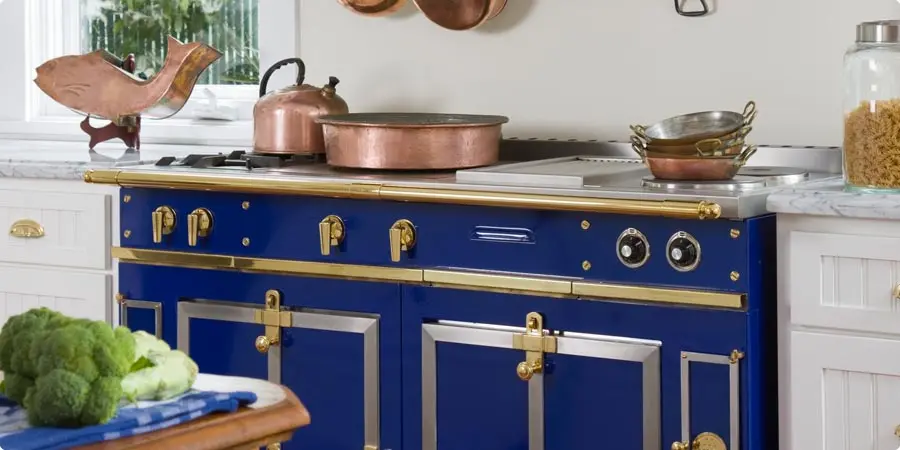
The days of matching every fixture, faucet, and finish to a single metal are behind us. Today, the most sophisticated kitchen designs intentionally combine multiple metals, and the results are richer, more layered, and far more personal than any monochromatic approach could achieve. Done thoughtfully, mixed metals bring depth, warmth, and a designer’s eye to the kitchen in ways that feel curated rather than collected.
Start with a Visual Hierarchy
The foundation of successful metal mixing is establishing a clear hierarchy before selecting a single fixture. Designers typically work with a dominant metal, a secondary metal, and an accent metal in a rough 60/30/10 ratio. The dominant metal anchors the space through major elements such as appliances or a range hood. The secondary metal introduces contrast through faucets, lighting, or cabinet hardware. The accent metal appears sparingly in decorative objects or specialty knobs, adding unexpected sophistication without competing for attention.
Balance Temperature and Finish
Metal combinations that hold together visually share a consideration for both color temperature and surface finish. Warm metals like brass, copper, and gold pair naturally with each other, while cool metals like chrome, stainless steel, and matte black form their own family. Stainless steel and brushed nickel are particularly versatile because they bridge both temperature families, making them ideal as a dominant metal.
Keeping finishes aligned within the secondary and accent tiers preserves cohesion even as the metal palette expands.
Equally important is finish consistency. Brushed finishes belong together, as do polished ones. Mixing a brushed brass hardware pull with a polished chrome faucet creates a jarring tension that undermines an otherwise considered design.
Strategic Placement Drives Cohesion
Beyond selection, placement determines whether a mixed-metal kitchen feels intentional or accidental. Positioning similar metals at comparable heights throughout the room creates a visual rhythm. Brass pendants at eye level, for example, relate naturally to brass cabinet hardware at the same elevation. Some designers also use specific metals to define functional zones, perhaps favoring matte black fixtures in the cleaning zone and warmer tones near the cooking area, reinforcing the layout through material language.
When it comes to hardware specifically, cabinet knobs and pulls offer the most accessible opportunity to introduce a secondary metal. In the custom kitchens we design throughout Northeast Ohio, a warm brass pull against a porcelain countertop or natural wood cabinetry is one of the most consistently striking choices our clients make.
The strategic layering of metals is one of the defining characteristics of luxury kitchen design today. With the right hierarchy, temperature balance, and placement principles, mixed metals elevate a kitchen from well-appointed to genuinely distinguished.
Begin Your Design
At Somrak Kitchens, our design team has guided Greater Cleveland homeowners through these decisions for over 70 years. Call us to begin designing a kitchen where every detail is considered.